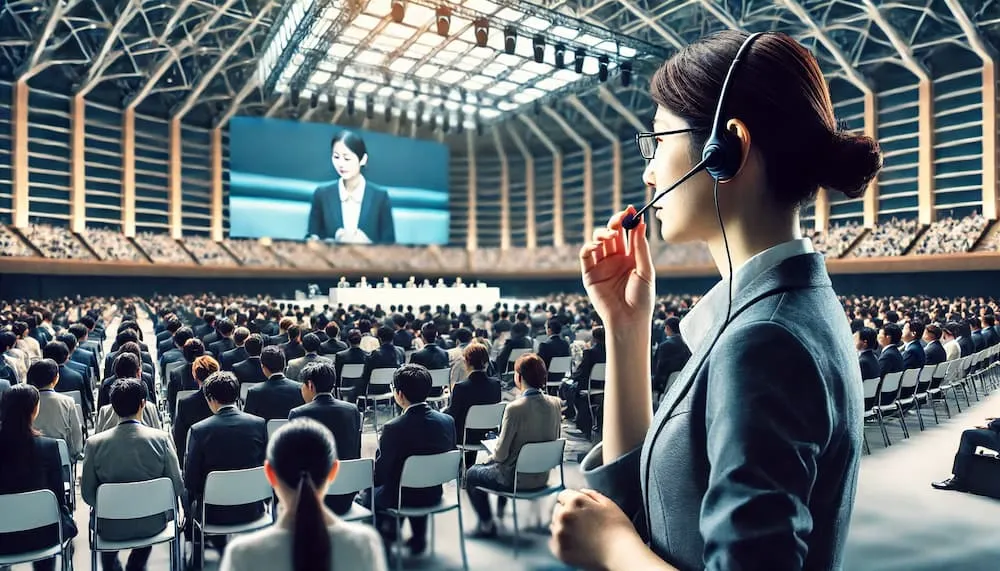
You don't need to speak Japanese to run an event in Tokyo. You need one person who does.
Is the language barrier really the problem?
Many overseas organizers assume that running an event in Japan without speaking Japanese is a long shot. Venues, caterers, AV crews and printers all work in Japanese, and most of them won't switch to English for you. That part is true. But it doesn't follow that you, the organizer, need to speak Japanese. In practice, plenty of events in Tokyo are run by people who don't.
Why the organizer's Japanese doesn't matter
Local vendors are used to working in Japanese with whoever is coordinating on the ground. As long as someone on your side can handle that side of the conversation, the venue doesn't care where the brief originally came from. What does matter is the reverse direction: when your speakers, sponsors and attendees need something, someone has to be able to answer them in English, on the spot. English-speaking event staff are surprisingly hard to find in Japan, and this is the gap that actually causes trouble.
The one thing you need: a bilingual person who knows events
The fix is not an interpreter, and it is not a bilingual team. It is one person who speaks both languages and has run events before. A general interpreter can translate your words but not your intent; they don’t know what a run of show is, why the AV check matters, or what "we need this by load-in" means to a Tokyo venue. Someone who has worked events on both sides can take your brief, turn it into what Japanese vendors can actually deliver, and explain the Japanese constraints back to you before they become surprises. With that one person in place, everything else can stay in English.
Reduce how much depends on language at all
The second lever is design. Clear visual signage at the venue, a printed and shared run of show, and information that is organized and circulated before the day all cut down on the amount of live translation needed. Translation apps and shared documents help at the edges. None of this replaces the bilingual person, but it means they aren't the bottleneck for every question.
In short
Can you run an event in Tokyo without speaking Japanese? Yes. What you need is not language ability across your whole team but one bilingual person who knows events, plus enough preparation that language stops being the thing everything depends on. With those two in place, the language barrier becomes a logistics detail rather than a reason not to come.